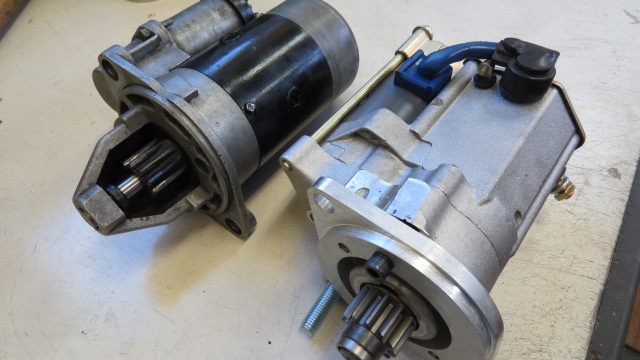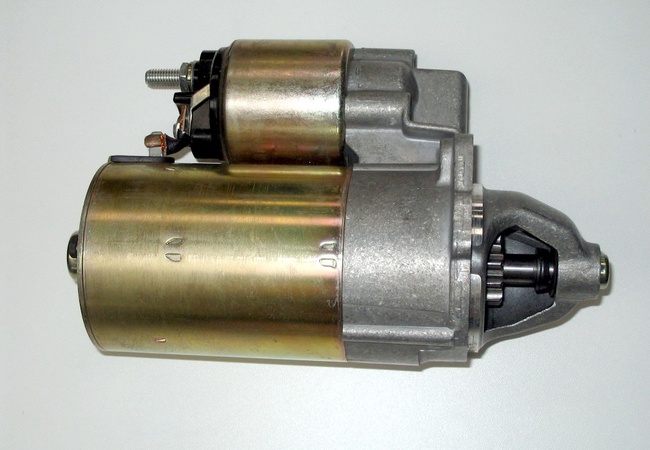

Starter Motor
A car starter motor is a critical component of a vehicle’s starting system, responsible for initiating engine operation. Its main function is to rotate the engine’s crankshaft at a sufficient speed to start the internal combustion process. Without a properly functioning starter motor, a vehicle’s engine would not be able to start, making it essential for every car. The starter motor is typically an electric motor powered by the car battery. It is connected to the engine’s flywheel or flexplate via a small gear called a pinion. When the ignition key is turned (or start button pressed), the starter motor engages, spinning the pinion gear which turns the engine’s crankshaft. Once the engine starts and begins running on its own, the starter disengages automatically to prevent damage. In terms of construction, a starter motor generally consists of a housing, armature, brushes, solenoid, and a drive mechanism. The solenoid acts as a relay, transmitting current from the battery to the motor while simultaneously engaging the pinion gear. The motor’s brushes transfer electrical energy to the armature, which rotates to generate the mechanical motion needed to turn the engine. A properly functioning starter motor ensures reliable engine starts under all conditions, from cold mornings to high-demand scenarios. When a starter motor begins to fail, common symptoms include slow cranking, clicking noises when turning the key, or complete engine start failure. Regular inspection of the electrical connections, battery health, and mechanical engagement can help maintain starter motor performance and extend its lifespan.