
Control Arms
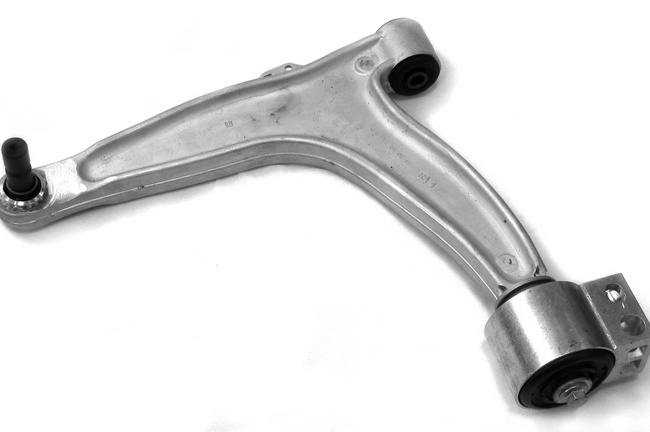
A car control arm (also known as an "A-arm" or "wishbone") is a vital suspension link that connects the vehicle’s frame or chassis to the wheel hub assembly. Its primary job is to act as a hinge, allowing the wheels to move up and down over bumps while keeping them perfectly aligned and preventing them from moving forward or backward. By serving as the structural anchor for the wheel, control arms ensure that the tires stay flat against the road for maximum grip.Structurally, a control arm is usually a triangular or "V" shaped piece of heavy-duty steel or aluminum. It features rubber bushings at the points where it attaches to the car's frame, which help absorb road vibrations and noise to keep the cabin quiet. On the outer end, where it meets the wheel, it is connected by a ball joint—a pivot that allows the wheel to turn left and right for steering while simultaneously moving up and down with the suspension. In most modern cars, there are both upper and lower control arms. If the bushings or ball joints on these arms wear out, the vehicle’s alignment will shift, leading to "wandering" steering, clunking noises over bumps, and uneven tire wear. Because they are the "connective tissue" of the suspension, keeping them in good shape is essential for maintaining predictable handling and keeping the car pointing in the right direction.